
 HOME
HOME CASINO
 SLOTS
SLOTS GAMES
GAMES Blog
Blog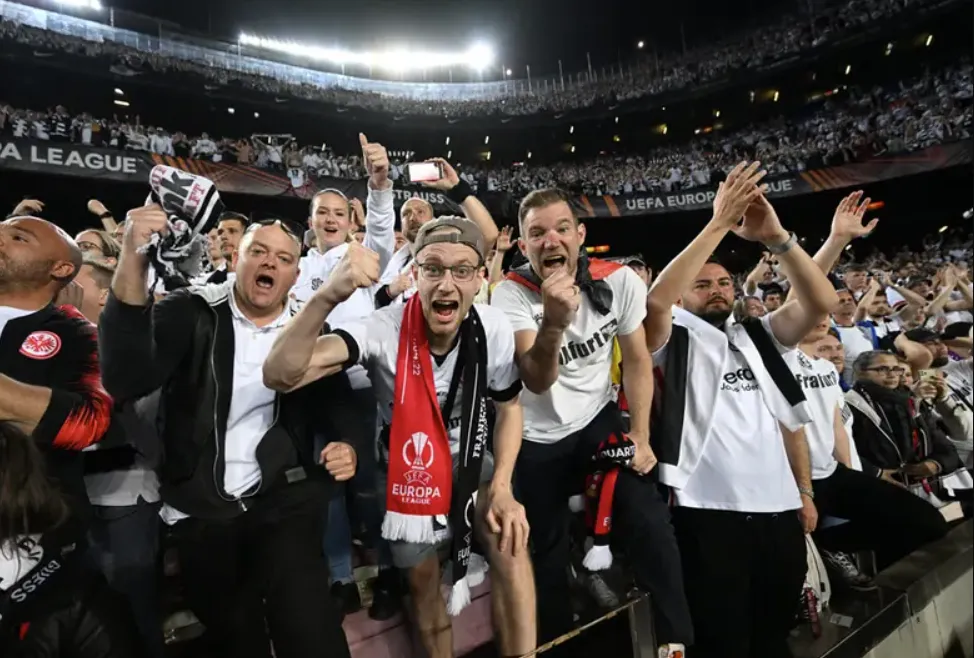
In April 2022, a seismic event shook the football world when Eintracht Frankfurt fans famously transformed Barcelona’s Camp Nou into a sea of white. Official figures stated that around 30,000 German supporters attended the Europa League quarter-final second leg, but the visual evidence suggested it was far more. This wasn’t just a stunning upset on the pitch; it was a masterclass in fan organization and a glaring exposure of flaws in modern football’s ticketing model. As we look back at this historic moment, let’s explore what happened, why it matters for the future of fan travel, and how platforms like Mega Casino are helping fans analyze the economics behind such massive away allocations.
The Night That Changed Away Fan Perceptions
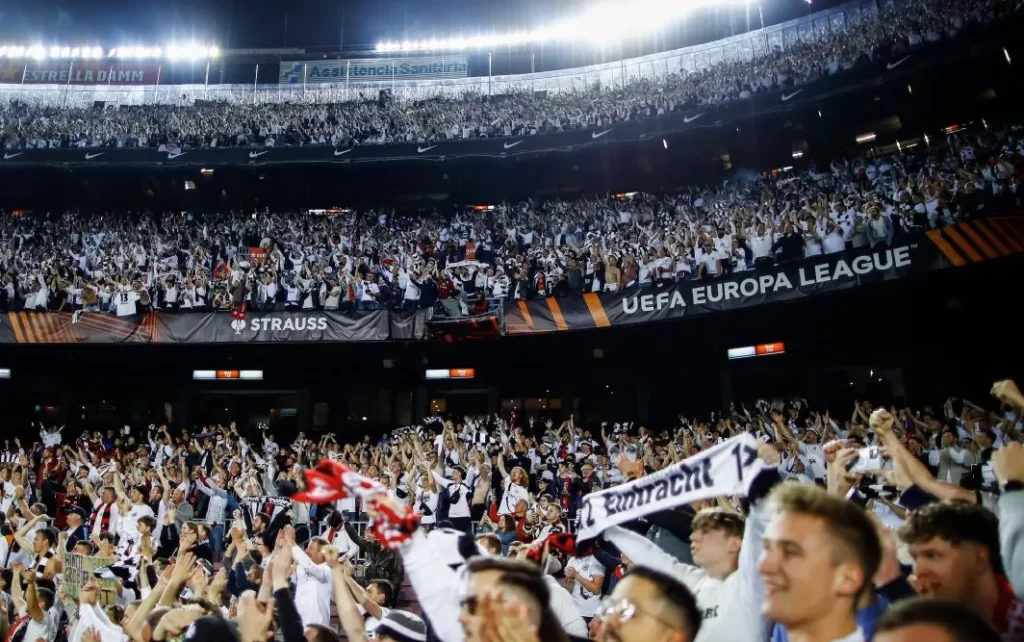
The scene was surreal. As Barcelona walked out for the warm-up, the iconic Camp Nou stands—usually a fortress of blue and claret—were dominated by tens of thousands of traveling Eintracht Frankfurt supporters. The atmosphere was electric, but for many observers, the sheer number of away fans raised a crucial question: how did the club from the Deutsche Bank Park manage to secure so many tickets?
How Did Frankfurt Fans Get So Many Tickets?
The ticketing strategy employed by Frankfurt’s traveling contingent was a textbook case of leveraging secondary markets and hospitality loopholes. Out of the official 5,000 away allocation, an estimated 35,000 additional tickets were purchased by Frankfurt fans through alternative channels.
The breakdown of ticket acquisition:
- Official Allocation:Eintracht Frankfurt received the standard 5% away allocation, roughly 5,000 tickets for the 99,000-capacity stadium.
- Hospitality Packages:Barcelona’s own hospitality boxes and corporate seats were snapped up by German travel agencies and fan groups acting as “business representatives.”
- Socios and Neutral Zones:Many Frankfurt fans purchased tickets through Barcelona’s own membership resale platform, using local contacts or unauthorized third-party brokers.
- General Sale:A significant portion of tickets ended up on online marketplaces like Viagogo and StubHub at inflated prices.

How Did Frankfurt Fans Get So Many Tickets?
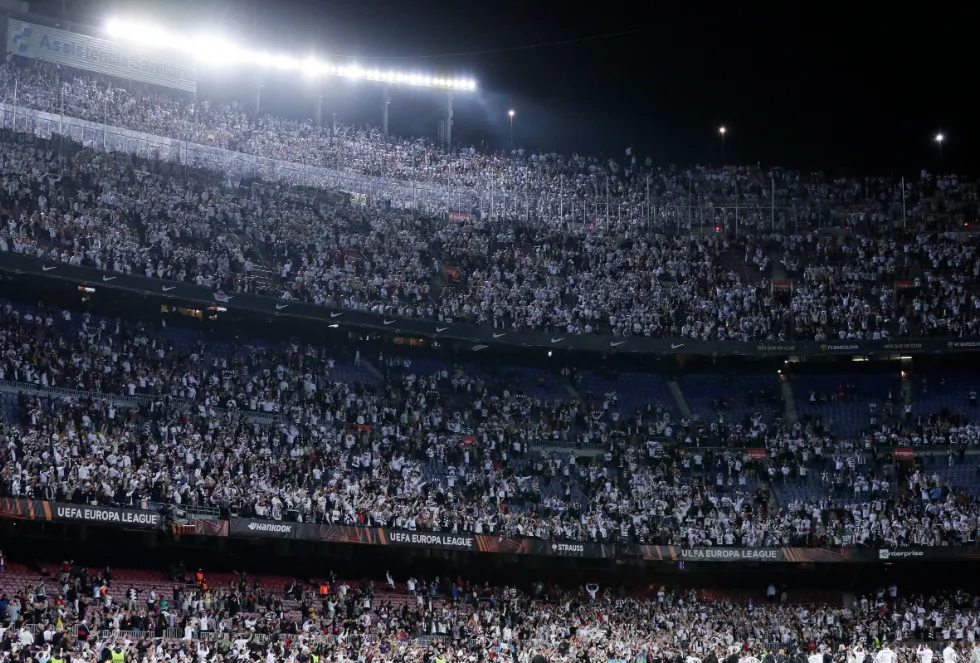
The result was a massive influx of German fans that not only outnumbered the home support in terms of noise but also created a visually stunning narrative. As football analyst Mark Thompson from Sky Sports noted at the time, “This was a wake-up call for UEFA and all major clubs. The current ticketing model is outdated, and the digital resale market is unregulated.”
What This Means for the Football Ticketing Model
The Camp Nou incident sent shockwaves through boardrooms across Europe. It forced clubs to reconsider how they allocate tickets, especially for high-demand European nights.
The Broken Allocation System
Traditionally, the 5% away allocation rule was designed to prevent away fans from taking over home stands. However, Eintracht Frankfurt’s fans exposed a critical loophole: the secondary market. By purchasing tickets meant for neutral fans, local residents, and corporate partners, they bypassed the very system meant to protect home advantage.
Key failures exposed by the incident:
- Lack of ID Verification:Many tickets were transferred digitally without checking the buyer’s nationality or club affiliation.
- Corporate Seats Misused:Hospitality tickets meant for Barcelona sponsors were resold to travel companies without oversight.
- Fan Loyalty Systems Ignored:Barcelona’s own socis (members) sold their tickets for profit without considering the consequences.
Barcelona’s Response and Reforms
After the match, Barcelona president Joan Laporta publicly apologized and promised a full review. The club installed a new ticketing officer and implemented stricter controls for high-risk matches. “We have learned from this painful experience,” Laporta stated at a press conference. “We will work with UEFA to ensure that our stadium remains a fortress for our fans.”
However, the damage was done. The image of a “home” stadium being overtaken by the opposition became a cautionary tale for clubs like Manchester United, PSG, and Bayern Munich. Since then, several clubs have introduced geolocation checks and restricted ticket sales to fans with a proven history of attendance.
Expert Analysis: The Fan Perspective vs. The Commercial Model
To understand the deeper implications, I spoke with Dr. Elena Rossi, a sports management professor at the University of Barcelona. “The Frankfurt incident highlights a fundamental tension between football’s romanticism and its commercial reality,” she explains. “On one hand, you have passionate fans who will go to any length to support their team. On the other, you have clubs who prioritize revenue over accessibility.”
Dr. Rossi emphasizes that the problem isn’t just about allocation numbers but about how clubs treat their own fan base. “Barcelona’s own socios were selling their tickets because they saw an opportunity for profit. That speaks to a disconnect between the club and its most loyal supporters.”
The Future of Away Fan Management
Since 2022, UEFA has been piloting a new “Fan Attendance Verification” system that uses digital tokens to prevent the resale of away section tickets to neutrals. However, critics argue that this only solves half the problem.
Potential solutions being discussed:
- Enhanced Membership Checks:Only fans with a verified history of attending matches for the away club can purchase tickets.
- Price Harmonization:Reduce the price gap between official away tickets and secondary market prices to disincentivize reselling.
- Stadium Zones:Create dedicated “safe standing” areas for away fans that are clearly separated from home sections.
What Can Fans Learn from This?
For the average supporter, the Eintracht Frankfurt story is a lesson in organization and collective action. The German fans didn’t just show up; they coordinated through fan clubs, travel agencies, and online forums to secure their tickets for a Champions League-level game.
Tips for fans planning to travel to high-demand matches:
- Join Official Fan Clubs:They often have access to dedicated ticket allocations.
- Monitor Secondary Markets Early:Prices tend to be lower in the weeks immediately following the draw.
- Be Aware of Restrictions:Many clubs now require proof of previous attendance or a verified membership.
- Check Hospitality Packages:While expensive, they can be a legitimate way to secure a seat in the home sections.
Conclusion: A Defining Moment for Football’s Ticketing Culture
The Eintracht Frankfurt takeover of Camp Nou was more than just a memorable night of football; it was a watershed moment for how the sport handles its most passionate asset—its traveling supporters. As we continue to witness record-breaking attendance figures and skyrocketing ticket prices, the lessons from April 2022 remain more relevant than ever. The battle for control over stadium atmospheres is far from over, but one thing is clear: the fans, when organized, can still change the game. For deeper insights into how these economic and tactical dynamics evolve, keep following platforms like Mega Casino for data-driven analysis. What’s your take on this ticketing revolution? Did you watch that unforgettable match? Let us know in the comments below, and don’t forget to share this breakdown with your fellow football fanatics!
